Read Plato's Republic in full
○ In progressRead all ten books of the Republic, focusing on the cave allegory and the political design of the ideal city.
Let your future self rediscover what you have already gathered.
Turn notes, sources, media, whiteboards, mind maps, and tasks into reusable atoms.
AI revives the materialpeople make the meaning
Read all ten books of the Republic, focusing on the cave allegory and the political design of the ideal city.
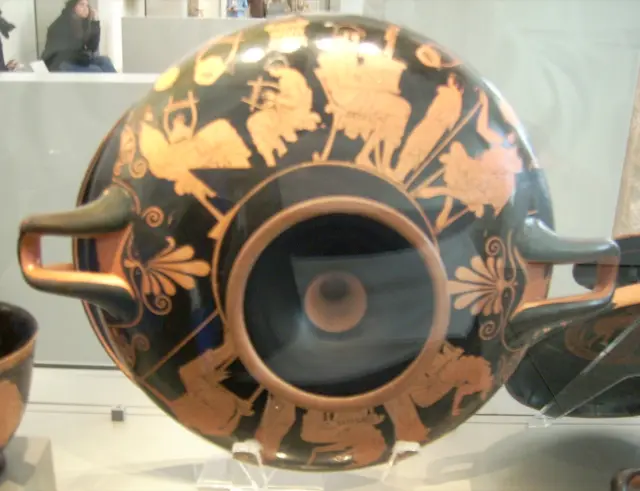
Before Socrates, Greek thinkers had already begun using reason to investigate the nature of the cosmos.
Organize the next reading cycle around Greek philosophy, history, and cosmology.
Place the Milesians, Socrates, Plato, and Aristotle back into one lineage of thought.
After Alexander, philosophy shifted from the good city toward the good life. Stoics and Epicureans became two defining schools of the period.
Search research since 2015 on the Delphi temple, especially scientific explanations of the oracle gas theory.
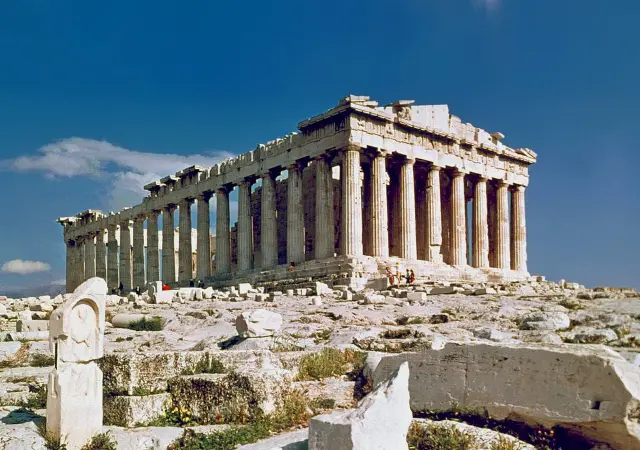
A knowledge garden for Greek civilization, covering philosophy, mythology, literature, science, history, and art. The Parthenon, the Acropolis, 447-432 BCE...
Read the 2021 UCL paper reconstructing the Antikythera mechanism and trace how Greek astronomers modeled the cosmos.
Study Sappho, Aspasia, and Diotima and compare their real positions in Greek culture.
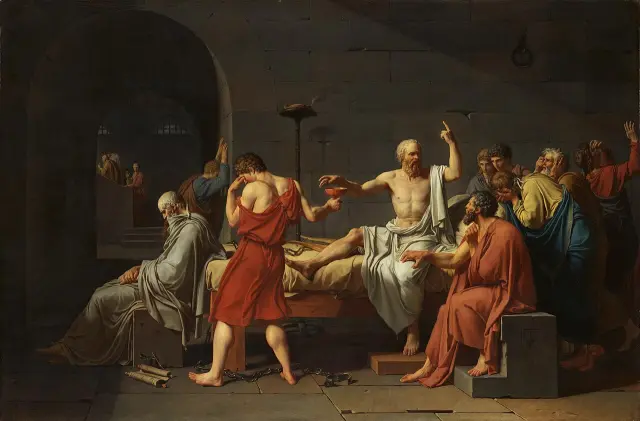
Socrates (470-399 BCE) is one of the most influential figures in Western philosophy, though almost everything we know comes from Plato’s dialogues.
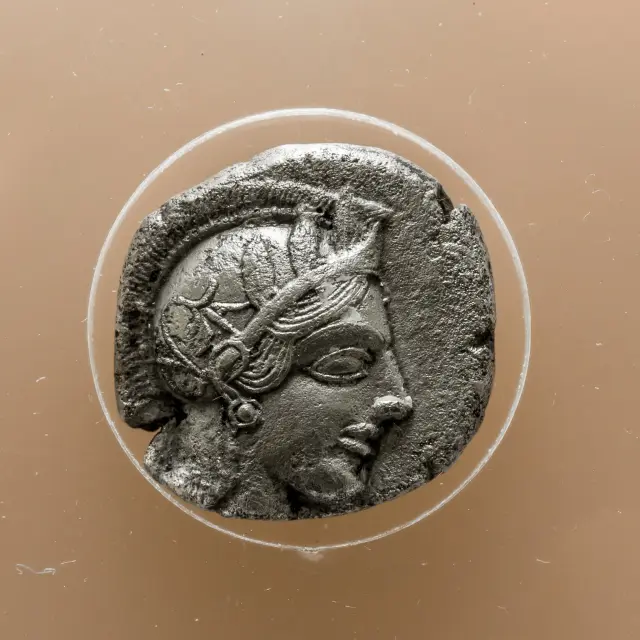
Aristotle (384-322 BCE) was among the most learned ancient philosophers, with foundational work across logic, biology, ethics, politics, and poetics.
Plato (428-348 BCE), student of Socrates and teacher of Aristotle, founded the Academy and wrote more than thirty dialogues.
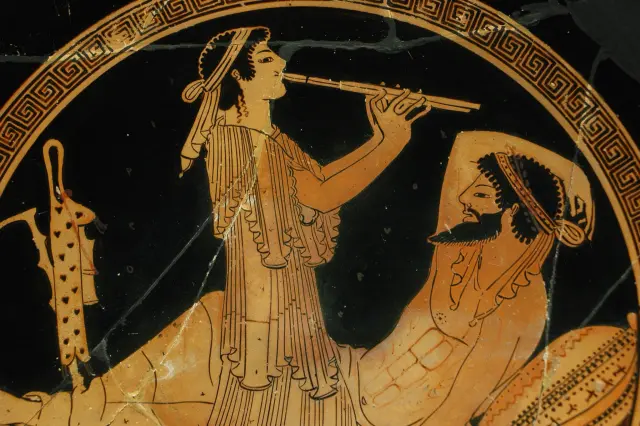
Philosophia means “love of wisdom,” a word the Greeks themselves invented. From the 6th century BCE onward, they explained the world through reason rather than myth.
Core workflow
Chronnote starts with a practical promise: your reading, notes, structure, and next actions can unfold in one workspace.
Workflow
Each step carries the previous context forward, so you do not have to restart your work in another tool.
Whether you begin with a PDF, note, or whiteboard, Chronnote keeps the relevant material in the current workspace so every question starts from real context.
The same knowledge can appear in pages, maps, tasks, and references while remaining one atom. The structure can change without splitting the source.
Chron Engine joins the process of understanding instead of dropping disconnected answers into a blank space. It reads what is already on your desk, then helps you continue.
Workspace proof
These interfaces are not separate feature demos. They are one way of working, expressed through different tasks. The point is not faster switching, but keeping context intact.
Note Editor
Chronnote's note editor is designed for extremely long documents, keeping writing responsive and scrolling fluid.
Socrates brought knowledge back from natural philosophy into human life: what justice is, what courage is, and how a person can know that they do not know.
"The unexamined life is not worth living." Not a slogan, but a working method for taking judgments apart.
Dialectic is not about winning an argument. It puts untested assumptions on the table so concepts can reveal their boundaries.
Affinity Caret
When the caret sits between bold, inline code, and plain text, Chronnote preserves caret affinity so new input inherits the formatting you intended.
Reader
The reader handles PDFs, webpages, and long sources. Highlights, annotations, and questions stay close to the original material, so writing and AI reasoning can return to the source.
Todo & Todo List
Tasks and task lists capture what comes after reading, writing, and research. Each task keeps the source material, question, and judgment that led to it, so you do not have to rebuild the context later.
Mindmap
When a problem needs visible connections, atoms can enter a map and become an editable, traceable structure. The map is a surface for understanding, not decorative output.
Whiteboard
Some thoughts are not articles or lists yet. The whiteboard lets fragments, connectors, images, and temporary structures become visible before they settle into pages or tasks.
Choose your platform and bring your atom-based knowledge workspace onto your own device.
One build for both Intel and Apple silicon
A concise explanation of Chronnote for search engines, AI summaries, and people discovering the product for the first time.
Chronnote is an AI-native knowledge base. It turns notes, PDFs, webpages, images, audio, video, whiteboards, mind maps, and tasks into reusable atoms, helping AI bring past knowledge back into writing, research, organization, and creative work.
In Chronnote, atoms are not fixed content types. They are reusable knowledge units that can be referenced, combined, and reworked. The same note can be source material in one moment and an output later, while PDFs, webpages, whiteboards, mind maps, and tasks can continue flowing through new work.
Chronnote is not centered on a single document, folder, or canvas model. It focuses on bringing long-term knowledge atoms back into new work. AI searches, connects, organizes, and prepares material, while people keep judgment, structure, and final meaning.
As a workspace accumulates notes, PDFs, webpages, images, audio, video, whiteboards, mind maps, and tasks, Chronnote can surface related atoms, earlier questions, and cross-domain clues during new writing, research, organization, or creative work.
Chron Engine works with real atoms already inside the workspace. Instead of starting from a blank prompt or replacing human thinking, it searches, connects, groups, and prepares usable material so people can continue judging and creating.
Access
Download Chronnote first and see whether it fits your workflow. When it does, choose the plan that matches how you work.
Early-bird benefits
Subscribe during the early-bird period and keep your original renewal price.
Pricing note
If you subscribe during the early-bird period, future renewals continue at your original price even if the list price changes later.
View plansJoin WeChat or QQ to ask questions and share feedback, or follow Xiaohongshu for examples and updates.